I wonder if I put a few words here?

Category: Daily Creates

Daily Creates 6- DataVis

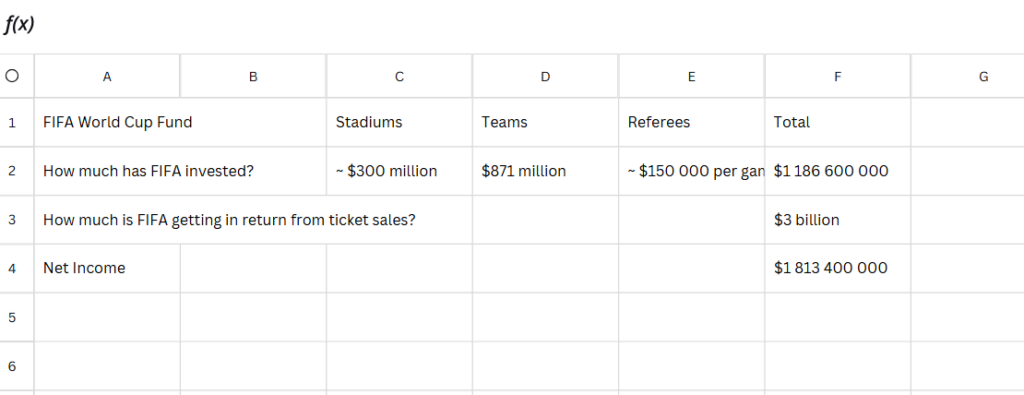
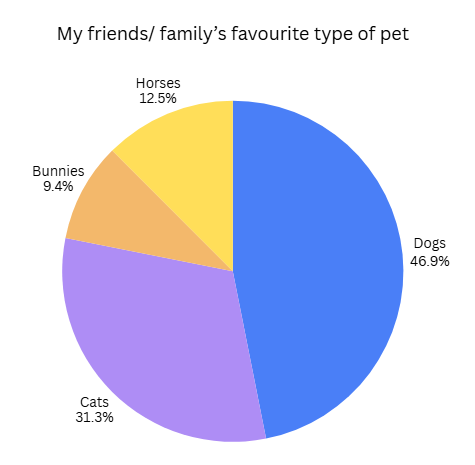
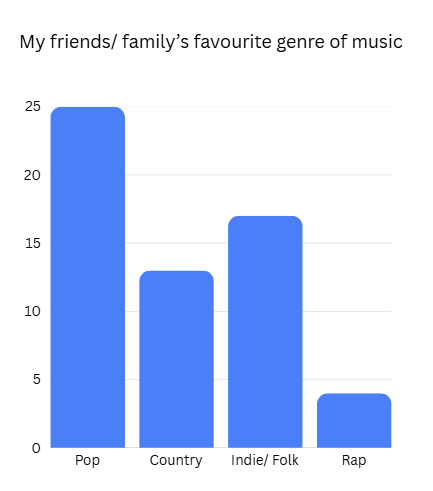
Data visualization is a helpful way to share information because it makes complex research easier for people to understand. Scientific studies often come with a lot of numbers, percentages, and technical language, which can be hard to interpret on their own. Using visuals like bar graphs and pie charts helps break that information down into something more approachable. These visuals give viewers a quick sense of what the data is showing without needing to read through long explanations.

What makes data visualization so effective is how clearly it highlights differences and patterns. A bar graph can show changes between groups or categories in a way that’s easy to compare, and a pie chart can show how something is divided up at a glance. Instead of trying to picture the numbers in your head, you can see the relationships right in front of you. This makes the information feel more organized and easier to follow.

Visuals also help keep people engaged. Most viewers process images faster than text, so a simple, well‑designed graph can make the information more memorable. It also helps build trust because the data is laid out in a clear, transparent way. People can see exactly where the numbers come from rather than trying to interpret them on their own.

This connects well to Mayer’s multimedia learning theory, which explains that people understand information better when it’s presented in both words and visuals. Data visualization supports this by giving viewers something clear to look at while they interpret the numbers. Instead of relying only on text, graphs help break the information into a format that feels easier to process. When viewers can see the data laid out visually, it reduces the mental effort needed to make sense of it. This makes the information more accessible and helps people focus on the main message rather than getting lost in the details.

Daily Creates 5- Multimedia

Screenshot

Multimedia use is a great method to attract a variety of audiences. It adds depth to the message or story you are trying to share by adding more context, providing a mix of text, visuals and/ or audio. This can be done in many ways: a text heavy document with images/ videos added in, an image or video can have audio dubbed on top, text can be put overtop of an image or video, or all three can be incorporated together. A good example of this would be news channels. The news has a news anchor to audibly share the detailed story, and is supported with visuals specific to the information and text headers to catch viewers attention with a brief hook description. Another example would be how-to videos on youtube. Creators often post videos of how to do the task, focusing on the item and the person’s hands. To have a clear and detailed description of what they are doing, they add audio over top of the video that can also be written as subtitles. To add more clarity to the video, creators often add symbols and text to emphasize the key steps or details such as arrows and labels.

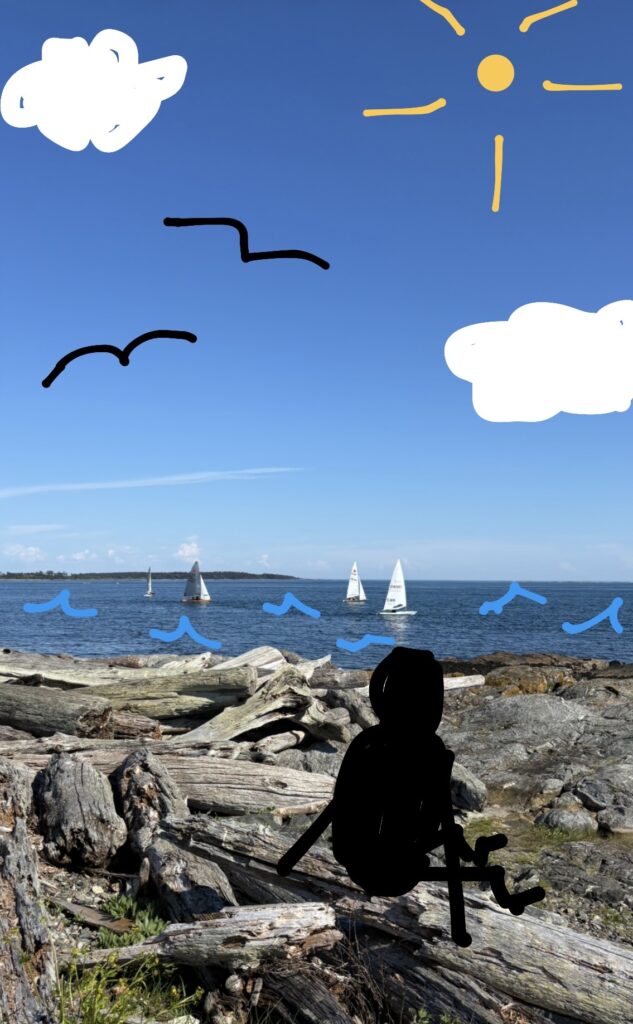
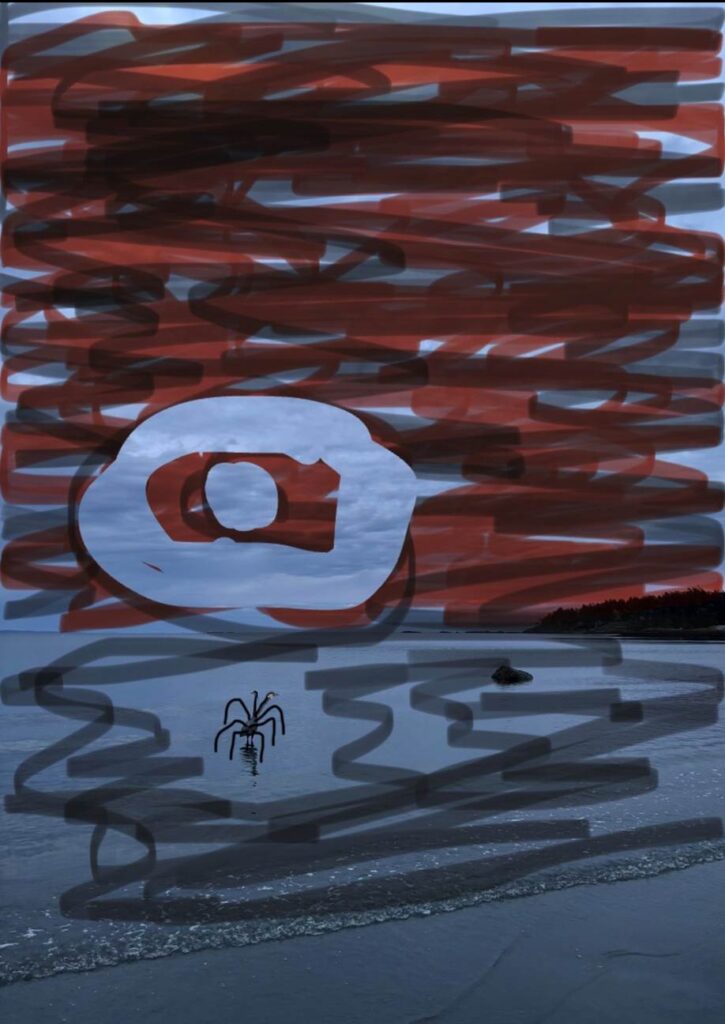
For my daily creates, I did not follow any prompts from the website because all of the ones I looked at didn’t incorporate the multimedia aspect. Instead, I went through my camera roll and added audio and text to a photo and a video. I also drew on top of another photo. I was just exploring some fun ways to incorporate multimedia into everyday photos and videos, adding depth to the photos/ videos to make them more interesting. As I mentioned in the paragraph above, there are more practical and useful ways to incorporate multimedia, but I wanted to focus on more day-to-day, average use of multimedia.

My use of multimedia in these daily creates connects directly to Mayer’s principles, especially in how different forms of media can work together to strengthen meaning. By adding audio and text to my photos and videos, I was applying the Multimedia Principle, combining visual and verbal information to create a clearer, more engaging message than either mode could provide on its own. I was also mindful of keeping each piece simple and focused, which aligns with the Coherence Principle, including only the elements that supported the main idea of the image rather than adding unnecessary decoration. Pairing visuals with spoken explanations reflects the Modality Principle as well, since distributing information across both visual and auditory channels helps reduce cognitive overload. Even though my goal wasn’t instructional, these small creative edits show how Mayer’s principles can enhance everyday media by making it more meaningful and easier for viewers to interpret.

Daily Creates 4- Video

Explain an Item- Dresser

The One Take Tongue Twister

The Most Dull Video Ever

Videos are a great style of media that connect visual representation with audio and/ or text. This format of using multiple senses in one file makes videos an extremely useful method of media. The one difficulty with videos is that it needs technology to function, unlike photos and written text, videos cannot be printed to make a book or a poster. This issue is not too pressing, as many people have access to technology today, but it does still limit viewing from various audiences.

From the Daily Creates prompts, the Explain an Item video is a great example of how videos can make things easier to learn and (potentially) more engaging. In my video explaining the dresser, I was able to show viewers what a typical dresser looked like, showing different angles and opening the drawers, while providing audio to explain what the purpose of the dresser was and what the drawers were.

The One Take Tongue Twister prompt is a good example of how someone could incorporate text into a video. By adding an image or text of the tongue twister I was reading, it would help viewers follow along with what I was trying to say. This would be helpful, especially for this video where the words were maybe a bit jumbled and blending together, to be more engaged and better follow along to the audio. This makes sure content is clear, specifically when the text is used to highlight key information from the video. The dresser video for example, I could use text to highlight the name of each part (dresser, drawer, handle) and have a written list of the uses of dressers/ what they can hold.

Having these multiple modes of media available in one video can be extremely beneficial to grasp viewers attention. A person may not be looking directly at the video to see the visuals, but they are still able to hear the explanation or other audio that goes with the video. Vice versa, if someone is unable to focus on or hear the audio (in a crowded/ loud space or deaf), they can still see the visual aspect, potentially watching the step-by-step process. If there is text, they can also read along to the video and grasp what the audio is trying to say/ explain.

Videos connect strongly to Mayer’s principles because they can naturally combine visuals, audio, and sometimes text, which makes them an effective tool for communicating information clearly. For example, in my “Explain an Item” video, showing the dresser from different angles while describing its purpose reflects the Multimedia Principle, since viewers receive information through both what they see and what they hear. Adding text or labels, like in the One Take Tongue Twister prompt or even in the dresser video, aligns with the Modality Principle by balancing visual and verbal channels so the viewer isn’t overloaded. Keeping the video focused on only the necessary visuals and explanations also follows the Coherence Principle, ensuring that every element supports understanding rather than distracting from it. Even though videos require technology to access, their ability to offer multiple modes of meaning with visuals and audio (and optional text) makes them accessible to a wider range of viewers and demonstrates how Mayer’s principles can enhance clarity and engagement in everyday media.

(Videos have been cropped to fit within the size requirements to share from my phone to my laptop, so I apologize if the videos seem short and missing information i.e the dresser video)

Daily Creates 3- Images

  • International Plant Day

The three flowers, I have received after jaw surgery from friends and family. The plant is a gift from the elementary class that I completed my 3-week practicum with.

  • Be Shady or Shadowy
  • Monster Art
  • Backlight it

Exploring the media of photography and images, a visual representation can provide a lot of detail and context to a story. A photo can help the viewers understand what a character looks like or the setting. This can be helpful  when a specific detail is important, as memory retention is better when there is a visual provided. When a person can picture the scene that a writer is trying to set, the reader will be more connected to the story.

Visuals are not just useful in storytelling, visuals are extremely helpful in day-to-day life, in learning and giving direction. When trying to explain something in the written or spoken word, information is often misunderstood. Providing an image to visualize information can help clarify and highlight important details.

When I have coached, it is extremely beneficial to include a visual representation. I normally I draw out the pattern of the drill when I am explaining it, then do a demonstration with a few of the players, so everyone has an idea of what the drill should look like. I don’t usually have this available, but having an image of the drill set up that can be drawn on would be more helpful to provide spacing and more specific details to the explanation. This provides more depth to the explanation, so the drawing isn’t just a whole bunch of lines overlapping.

This is just one example of how an image can provide more context, but there are many other examples in real life where this benefits. Images are also useful in storytelling, written or oral. A good use of images when storytelling would be when trying to describe a very specific location or character that will be mentioned throughout the story (especially if it is infrequently mentioned). Adding an image of this thing or place the first time it is mentioned will provide a visual that they can reference or picture in their head now, anytime that this is referenced in the story. A good demonstration of this would be the Monster Art activity; if I tried to explain the thing that I made only using words, it would not be very clear and readers may become confused, but providing the image gives a clear visual that they can now use throughout the book.

Photography connects well to Mayer’s principles because images help viewers build a clear mental model of what they’re learning or reading about. Photos also tie into the Signaling Principle when certain parts of the image are emphasized, these cues guide attention to the most important information. The Redundancy Principle relates as well; a single clear image often communicates spacing, structure, or appearance more efficiently than repeating the same details through long verbal explanations. Activities like the Monster Art example show how essential visuals can be: without the image, the description would be vague and hard to picture, but the photo gives readers a concrete reference that strengthens understanding throughout the story. Photography, whether it’s used in coaching, storytelling, or everyday communication, helps provide clarity by giving people something concrete to visualize and remember.

Daily Creates 2- Audio

This week, I explored methods of using audio as a form of media. To record the audios, I used Voice Memos on my iPhone, which was a simple and convenient way to document the audio for my Daily Creates. The four Daily Creates that I did this week are: Poetry Reading, Pronounce This, Wolfram Tones, and Visualize The Music.

From these audio examples, I found that this form of media can be a very beneficial format to add depth to a perspective. For example, in Pronounce This, I had to read a long word out loud and guess how it is pronounced solely based on the spelling. In the English language, there are many words that are not pronounced the way that they are spelled, so having the audio to hear how the word is pronounced is useful. Audio is also useful to hear the tone of what someone is trying to say and what the sentence or story is emphasizing; this is demonstrated in the Poetry Reading.

Wolfram Tones and Visualize The Music were both interesting experiments to try, exploring the apps. It was cool to see how the noises I made translated into art/ images when I did Visualize The Music. I also enjoyed playing with the Wolfram Tones app to create my own music.

Exploring audio as a form of media this week showed me how sound alone can shape understanding in ways that align with several of Mayer’s principles. In activities like Pronounce This and Poetry Reading, audio supported the Voice Principle, since hearing a natural human voice made the content clearer and more engaging than reading the same words silently. The Temporal Contiguity Principle also relates, because the timing of the spoken explanations, such as hearing the pronunciation immediately after seeing the word, helps listeners connect the information more effectively. Audio tasks like Wolfram Tones and Visualize the Music relate to the Personalization Principle as well, since creating my own sounds or interpreting them through art made the experience more interactive and meaningful. Even without visuals, audio adds meaning through tone, pacing, and emphasis, offering depth that text alone can’t always provide.

P.S I apologize for any unclear pronunciation, I am recovering from jaw surgery and am unable to speak super clearly.

Also I am having difficulties uploading the voice memos, so I have just included the video of the Visualize The Music. I will see if I can figure out how to add the audio and update my post later, if I can.

Daily Creates 1- Text

National Limerick day (May 12):

Trees in the breeze,

Pines on the brink of freeze.

Critters burrow,

The dying plants make furrows,

But the cold doesn’t seize.

National lost sock day (May 9):

Drawers pulled out, laundry basket scoured, all corners of the house checked; no sock found. How is this possible? I have looked everywhere in this house, top to bottom, and nothing. All I am left with is this one green sock decorated with trees and string lights. It would have been perfect for my work Christmas party, but I can only find the one sock. I guess I’ll have to make a quick stop at the dollar store before the party to get a new pair of Christmas socks. That means I have to leave right now, since the only dollar store open on Christmas eve is 10 minutes out of my way.

I slip on my red kitten heels, grab my keys, and run out the door. It is a brisk evening in the small town of Comox. The wind tangles my soft curls slightly; the slush caused by the wet snow splash up my ankles. I make it to my car, and immediately get in, twist the key and blast the heat. I connect my phone to the Bluetooth, start my Holiday Hits playlist and pull out of my driveway.

The drive to the dollar store is quiet. Only the soft music playing and the occasional swipe of the windshield wipers make any sound. I quietly hum to Walking in a Winter Wonderland as I pull into the parking lot of the dollar store. I park the car and rush into the store. There is only me and one sole worker in the store, Last Christmas plays from the store speakers. I quickly go to the aisle with the Christmas socks and find a nice pair of socks that are white with Santa and his sleigh of reindeer, perfect! I grab them and walk right up to the till to pay. The transaction goes through and I am the door.

I make it to my staff party just in time. I put my new Christmas socks on and head in. By the end of the night, I am exhausted. I say goodbye to my friends and boss, and head out. I get home at 11:30, a bit late for me, but I’ll survive the one late night. But I am really looking forward to crawling into bed. I get into my pjs, brush my teeth and cozy into bed. As I am settling into sleep, my dog, Ranger, comes to my bed to say goodnight and fall asleep beside me. As he approaches, I see a green sock hanging from his mouth. My missing Christmas sock! Of course, Ranger stole it.

First Lines (May 6):

I am a bowl, chipped at the rim.

Still kept but hardly used.

The signs of wear show my age,

Scratches from the metal utensils,

My once bright colours dulled,

And of course, the chip on my rim,

Caused from years of mistreatment.

Carelessly tossed into the dishwasher,

Being placed on the counter too forcefully,

The hard utensils constantly banging my edges.

Slowly weakening my structure,

Till one day, I cracked,

My old frame couldn’t take it anymore.

It was only a small chip on the rim,

But the small imperfection has rendered me a discard.

Summary

For this week of daily creates, we were asked to focus on the format of text. Text is one of the most common and simple ways to document a person’s thinking. It can be used in all areas of life, taught to us all throughout school and incorporated into our day to day, needing the skill to work and communicate. To start of the first week of Daily Creates, I chose three of the writing prompts: National Limerick Day, National Lost Sock Day, and First Lines.

For Limerick Day and First Lines, I was asked to write a poem. It has been several years since I have had to write a proper poem, so it was interesting to go back to that style of thinking and writing. I had to google what a limerick poem was because I had completely forgotten. I discovered that a limerick poem is a five-line poem that follows the rhyming pattern AABBA. I had the freedom to choose the topic for this poem, so as I was sitting in my living room trying to decide what to write about, I was looking out the window, watching the branches of the trees behind my house sway slightly, which became the first line of my poem. I decided on this topic before I knew the structure of a limerick poem, so I sat there thinking of different ways I could take this poem. When I discovered the limitations to my poem, it made me brainstorm new ideas to connect my topic into a proper limerick poem. In the moment, I was struggling to come up with words that rhymed well, so I searched online to provide me some ideas that would go well with what I had. Overall, I had a lot of fun making this poem and having the opportunity to explore this kind of creativity again. Limerick poems are short and follow a simple pattern, but it takes thoughtful time to create something that flows.

The First Lines poem, I had a bit more freedom for the format of my poem, but I was given a list of prompts I had to choose from. For me, this made the process of writing a poem faster and easier. I wasn’t constrained to a certain rhyming pattern, I could write down whatever came to mind, and I had some inspiration on what to write about. One of my biggest struggles with creative writing is coming up with a good topic to write about. I chose the prompt “I am a bowl, chipped at the rim” and I found lots of ideas coming to mind. The sentence could be seen as something random, but I found a lot of meaning behind the simplicity and was able to continue with the metaphor easily. I found the freedom of this creative writing super fun, the storytelling behind a chipped bowl had me thoughtfully analyzing ways to share the perspective of a chipped bowl.

The prompt of National Lost Sock Day gave me the choice to write a poem or a short story, so I decided to switch it up from the poems and write a story instead. I started the story with describing a sock, and I figured a distinct pattern would be useful for the purpose of this story. I decided on the colour green for the sock and immediately thought of Christmas, so that became the theme of my story. I thought it would be funny to find the sock at the end of the day when the character wouldn’t need it anymore (Murphy’s Law!). I also needed a reason for the sock to go missing and I immediately thought of how my dog always likes to carry a shoe or a sock in his mouth, especially when he gets excited, like greeting people at the door. Since I had my idea set, I began typing and really tried to include some small details to add to the storytelling of this short story. The process of writing the story took me a bit, trying to connect all the details to the conclusion that I had decided on.

I found this Daily Creates exercise engaging to explore. It had me working on my storytelling and creative thinking. I haven’t had to use this creative way of thinking and storytelling since high school, so it was fun to try it again. Text is a simple media, but it is so accessible to people and is fundamental in our day to day lives. Writing and text are great skills to continuously practice.

Working with text connected well to several of Mayer’s principles, especially in how written language shapes understanding and guides the reader’s thinking. Text-based prompts like the limerick and First Lines poem relate to the Segmenting Principle because writing naturally breaks ideas into manageable pieces like lines, stanzas, and sentences that help readers process meaning step by step. The Personalization Principle also fits, since creative writing encourages a conversational, human tone that makes the content more engaging and easier to connect with.